
o2_sensor
This is an old revision of the document!
Table of Contents
Notes
- The oxygen quenching is predicted by the Stern-Volmer equation, and changes in intensity or lifetime of the fluorescence can be monitored
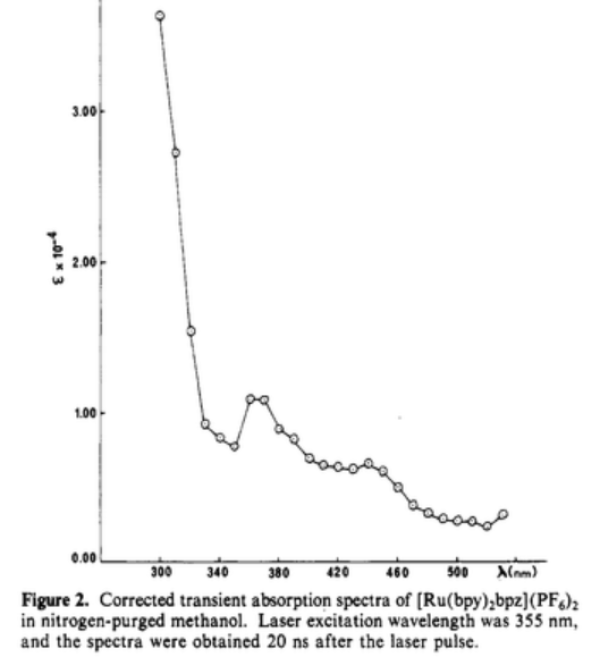
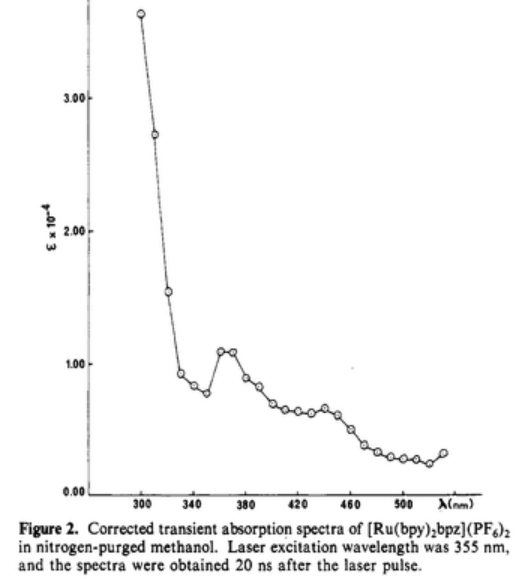
- Ruthenium complex
- https://www.ruixibiotech.com/pts/ru-bpy3-pf6-2 CAS: 60804-74-2 $400/g
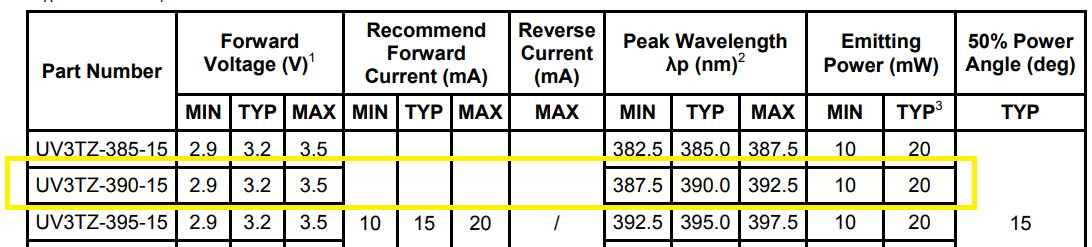
390nm LED
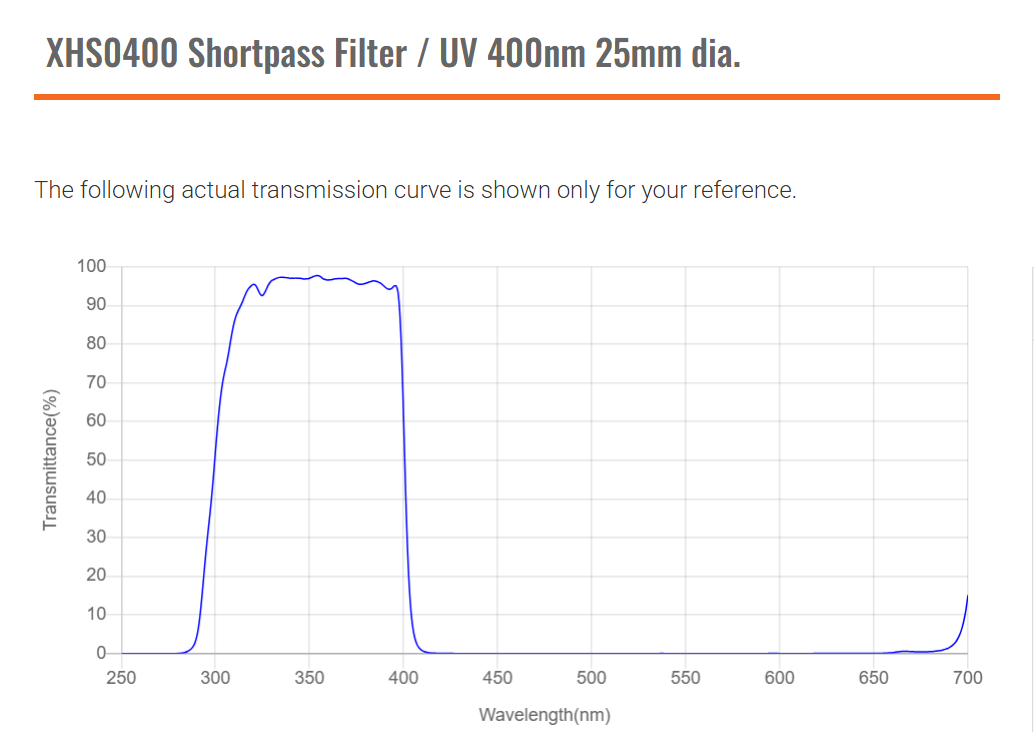
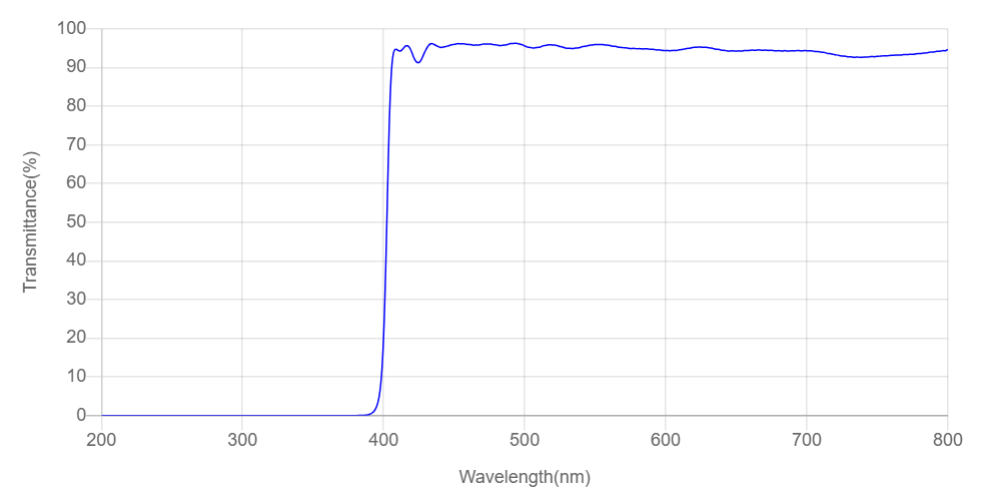
Shortpass Filter / UV 400nm
Fluorescent Target
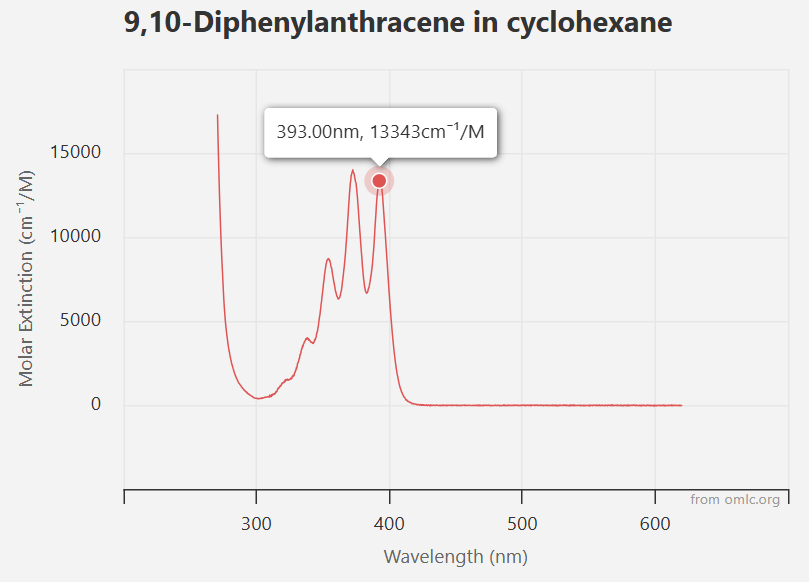
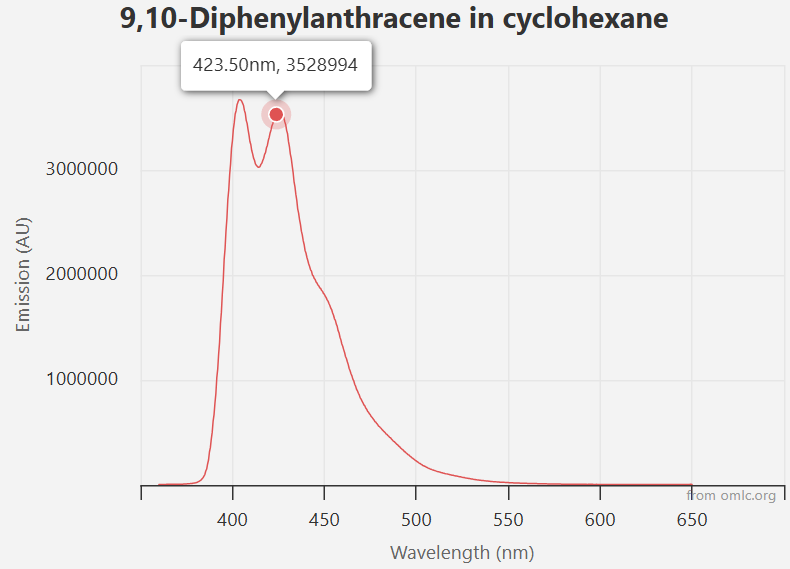
- 9,10-Diphenylanthracene
- Absorption Peaks: 270nm, 354nm, 373nm, 393nm
- Fluorescence Emission Peaks: 404nm, 425m
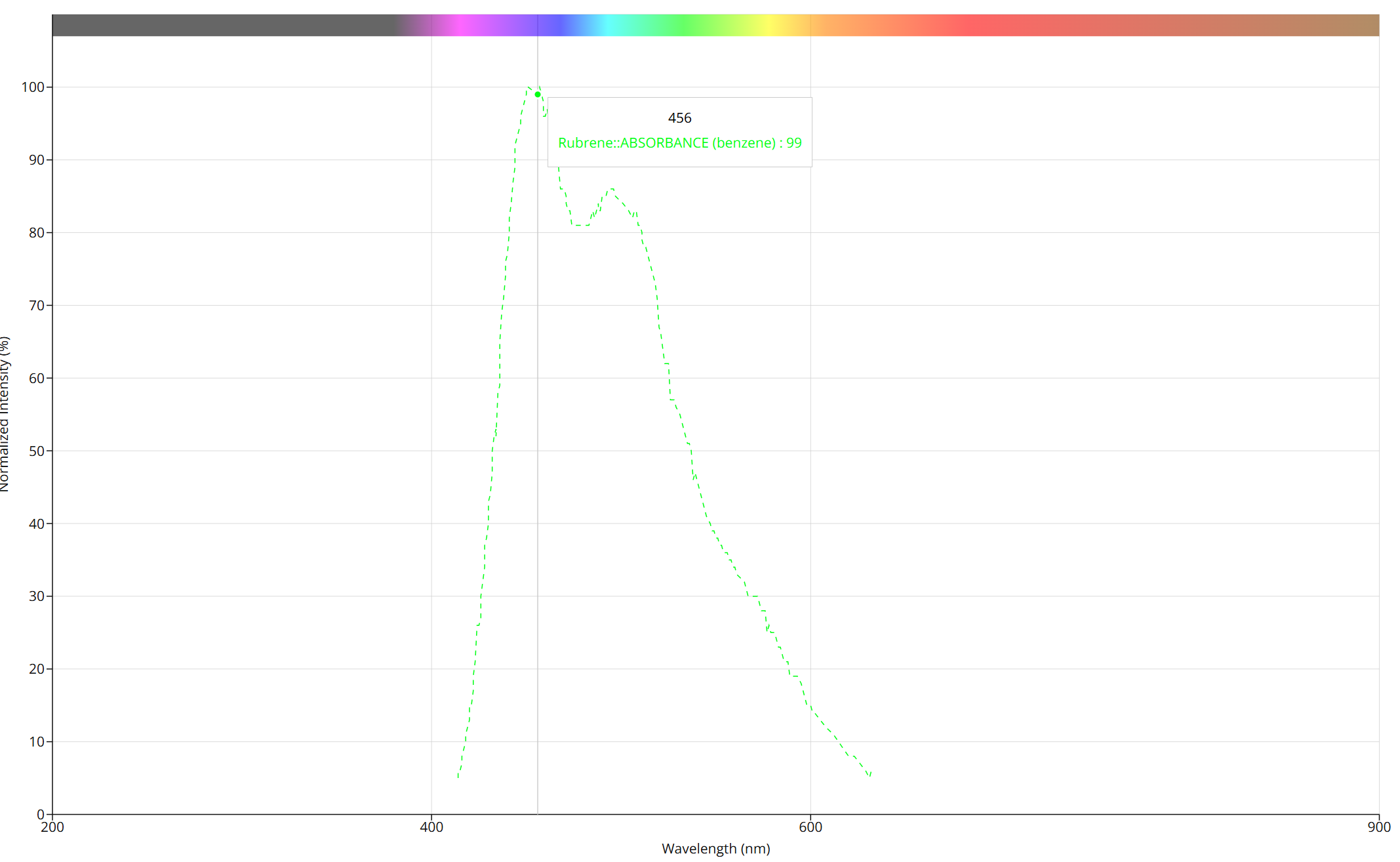
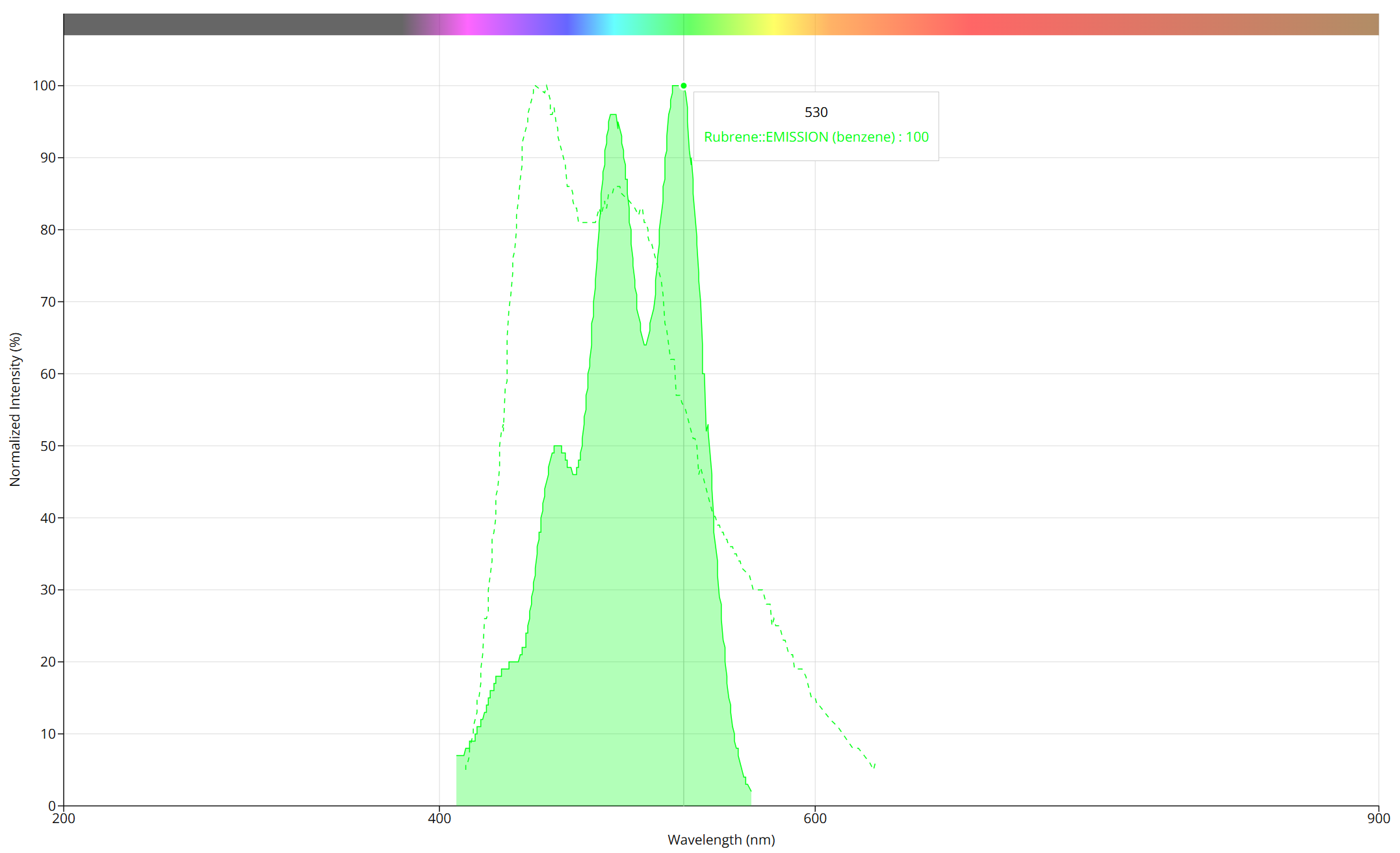
- rubrene (5,6,11,12-tetraphenylnaphthacene) is what's probably in the real sensor
- excitation peak at 450 nm and an emission peak at 530 nm
PDMS polymer binder
- Sylgard 184
- Sylcap 284 is available with smaller MOQ and has similar gas permeability but cures faster
400nm longpass filter
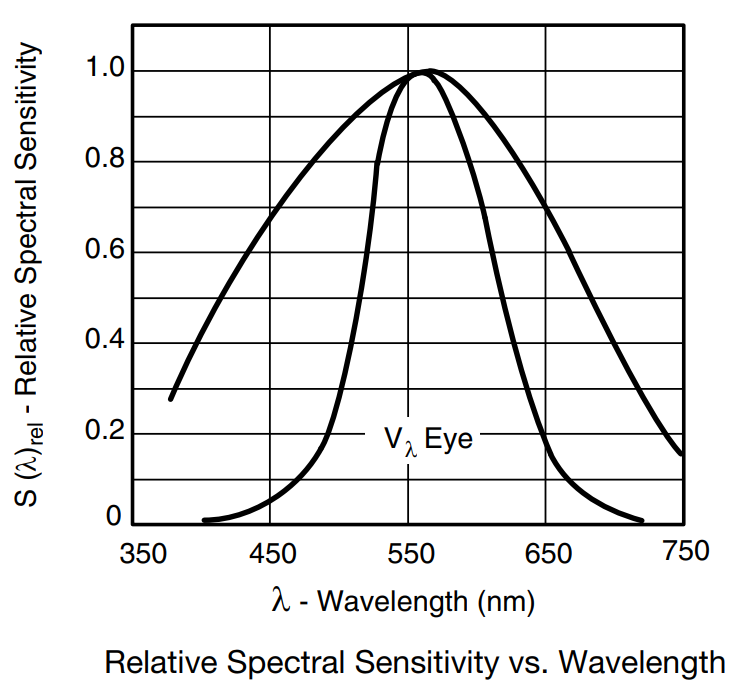
Optical Sensor
- Silicon photodiode covering as much UV as possible, make sure 420nm is in spectra
Making Rubene Samples
Doping rubrene into PDMS
(e.g., Sylgard 184 or a similar PDMS variant like Sylcap 284).
Most published oxygen-sensor designs with rubrene start in a relatively narrow doping range to balance brightness and avoid dye aggregation or self-quenching.
1. Typical Doping Range
- Starting Point: 0.01–0.1 wt% (by weight of rubrene relative to the total weight of uncured PDMS) is a commonly cited window.
- In practical terms, this might translate to about 0.1–1 mg of rubrene per gram of PDMS base.
- If you see aggregation or self-quenching (the fluorescence drops because the molecules are packed too closely), reduce the concentration. If the signal is too weak, you can increase it slightly toward the upper end of the range.
Why This Range?
- Fluorescence Brightness vs. Self-Quenching
- Rubrene is highly fluorescent, so even a small concentration can yield significant emission.
- Above roughly 0.1–0.2 wt%, many organic dyes (including rubrene) begin to exhibit “concentration quenching,” where the emission drops due to exciton–exciton annihilation or dye aggregation.
- Cost and Solubility
- Rubrene can be expensive, and it’s only moderately soluble in typical organic solvents. Over-saturating the mix will result in precipitates, optical scattering, or inhomogeneous films.
- Oxygen Diffusion
- PDMS is highly oxygen-permeable, which is great for oxygen sensing but also means the dye gets quenched quickly. Going too high in dye content doesn’t necessarily improve sensitivity—it may just cause more self-quenching without improving the sensor’s performance.
2. Practical Mixing Tips
- Pre-Dissolve the Rubrene
- Dissolve rubrene in a small volume of an organic solvent (toluene or chloroform) at a known concentration (e.g., 1–10 mg/mL).
- Slowly add this solution to the PDMS base resin while stirring. This helps achieve more uniform dispersal.
- Degas
- After mixing, place the solution under vacuum to remove both solvent and air bubbles.
- If you have a two-part system (base + curing agent), you might do a preliminary degassing before adding the curing agent, then a final degassing after thoroughly mixing in the catalyst.
- Curing
- Many PDMS systems can cure at room temperature in 24–48 hours or at 60–70 °C for a few hours.
- Try not to exceed 120 °C or keep the mixture at high temperature for too long—rubrene will degrade over time if both heat and oxygen are present.
3. Considerations for a 450 nm LED
- Absorption Spectrum of Rubrene
- Rubrene absorbs sufficiently at ~450 nm to fluoresce orange.
- Verifying the absorbance in your final PDMS film to ensure you’re not “under-absorbing.”
- Film Thickness
- If the film is too thick or dye concentration is too high, inner regions might not be excited properly due to light attenuation.
- A thickness of ~0.1–1 mm is typical for sensor films, but this depends on optical design and the LED intensity.
- Sensor Calibration
- Once cured, measure the fluorescence intensity (and/or lifetime) under different known oxygen concentrations to build a calibration curve using the Stern–Volmer relationship.
4. Adjusting the Ratio Over Time
- If the Film Is Too Dark (Self-Absorbing)
- Lower the dye percentage. Even going from 0.1 wt% down to 0.02 wt% can make a big difference in clarity and reduce self-quenching.
- If the Signal Is Too Dim
- Increase the dye content in small increments (e.g., from 0.02 wt% up to 0.05 wt%), but watch for diminishing returns due to concentration quenching.
Bottom Line
A good starting point is 0.01–0.1 wt% rubrene relative to the PDMS base. Begin on the lower side (e.g., 0.02–0.05 wt%) to avoid aggregation, see how bright the sensor is at 450 nm excitation, and adjust accordingly. Once you have a homogeneously dispersed rubrene-PDMS film, you can calibrate its oxygen response using the Stern–Volmer equation and fine-tune the formulation to optimize fluorescence intensity versus oxygen quenching sensitivity.
pH optode sensor notes
- Pyranine Solvent Green 7 CAS 6358-69-6 aka HPTS aka Pyranine
- Tetraethyl orthosilicate (TEOS) or methyltriethoxysilane (MTES)
o2_sensor.1737932365.txt.gz · Last modified: 2025/01/26 22:59 by kenson